



Gemma Brown, Co-Director of Women in Games and Co-CEO of Dovetail Games, joined us to speak to our students about her mission, her career, and what the industry really looks like from the inside.
Women in Games is an empowering organisation that supports women across the gaming industry, challenging gender bias and pushing back against the barriers that have long made games a less welcoming space for women.
We sat down with her as part of our industry speaker series, hosted here at Access Creative College in Lincoln, and what followed was one of the most honest, practical, and genuinely inspiring conversations we’ve had.
What is Women in Games?

Women in Games was founded by Marie-Claire Isaaman and is co-directed by Gemma Brown. The organisation is a global not-for-profit dedicated to building a fair, equal, and inclusive environment that encourages and lifts women across the gaming sector.
Their mission is simple but ambitious: to do the right thing and to inspire others to follow. They work across four key areas, Policy, Education, Industry, and Community, to drive lasting, systemic change across the games world.
With over 2,600 ambassadors active in 109 countries, Women in Games is one of the most far-reaching networks in the industry. And crucially, it’s open to everyone, women, men, and non-binary people alike, because as Gemma puts it: “The only way we change the dynamics is all working together.”
From HR to Co-CEO: Gemma’s journey
Gemma’s path into games wasn’t planned, and that’s exactly what makes it worth hearing.
“I would like to say a lot of luck, more than focused judgment… It was never on my career direct trajectory. It wasn’t something that was discussed at school.”
After leaving college early and building experience in HR, a recruiter called with an unlikely opportunity: a small train software company in Chatham that needed some help getting organised. Gemma said yes.
“I wanted to learn all of the different aspects of everybody’s job… my world was opened up at that point. I thought, this is really a place I want to be.”
That 35-person studio became Dovetail Games. And Gemma, who never imagined she’d end up running it, is now co-CEO, 13 years later.
What skills do games studios actually look for?

This might be the most useful section for anyone thinking about a career in games. And Gemma’s answer might surprise you; it’s not just about technical skills.
“I think people assume that it’s going to be coding or art or those technical skills… mainly it’s about problem solving, because it’s about working well with others.”
Dovetail is a hybrid studio; most people work from home, and that means communication matters more than ever. You can’t wait for someone to notice you need support.
“You have to be intentional with what you need… we employ adults, and we expect you to be in charge of your own career.”
The technical skills matter too, but they’re always evolving.
“The technical skills that you needed 13 years ago are different today, and they will be different next week.”
Stay curious, keep learning, and don’t wait for opportunities to come to you.
How to get your foot in the door
At Dovetail, CVs are scored against the job description. If a skill is listed and you don’t have direct experience, don’t ignore it; acknowledge it, and show you’re ready to learn.
“If we say we want Jira experience and you don’t have Jira experience directly, pull on what you can. Mention Jira, you’ve looked at Jira, you’re up for learning Jira.”
Especially for junior roles, showing you’ve played the studio’s games and have something thoughtful to say about them makes a real difference.
“For Dovetail, we’d look for people who have played our games, are passionate about our games… Even if you don’t enjoy train simulator games, there are elements that you could pull on.”
Dovetail runs a Play Lab, a playtesting programme where members of the public can apply to come in and test games. It’s real, relevant experience, and it’s free to access.
“You can apply online, and we get people in to test. So you can draw on some experience there.”
Networking: Yes, it’s scary. Do it anyway.

Gemma didn’t sugarcoat this one.
“It is scary. Sometimes you have to do things even if you’re scared of them. That’s the only way to do it.”
She’s had coaching and hypnotherapy to manage public speaking anxiety, and still stood up in front of 450 people the day before we spoke. Her advice for anyone just starting out:
At in-person events, look to the edges. Find someone else who looks nervous. Talk about the weather. Keep it brief and move on. Have your LinkedIn QR code ready on your phone.
For online events, the Women in Games Careers Expo has a built-in networking function where you match with another attendee for three minutes, a lower-stakes way to practice.
“It’s like a plaster, you’ve just got to rip it off. Most people find it nerve-wracking. But it is the way to get connections.”
How can you get involved with Women in Games?

Anyone can join as an individual ambassador, for free, on their website. You don’t need to already be working in the industry. If you’re on a pathway towards it (like a games course), you’re eligible. Ambassadors get access to quarterly meetings, shared resources, and a global community.
The Women in Games Careers Expo is a free, online event open to everyone, not just women. It features studios in an exhibition space, speaker sessions, and a matchmaking networking function.
“There are all games companies in the exhibition part, and that’s where you can meet the teams directly.”
Gemma also mentioned Limit Break as another organisation offering mentorship for people coming into the industry.
And if you want to connect with Gemma directly?
“I’m always happy for people to reach out to me on LinkedIn and always open to having a coffee or a call.”
One piece of advice for your 16-year-old self
“Don’t fear your future and don’t be paralysed by what could happen. Just live in the moment and enjoy being young and youthful.”
Gemma’s own story is proof that the path into games doesn’t have to look like anyone else’s. She didn’t plan it, didn’t study it at school, and didn’t even own a console growing up, only a Game Boy. And she’s now co-running one of the UK’s most exciting simulation studios and helping shape the future of representation in the entire industry.
Your route might look completely different. That’s fine. What matters is that you start.
Ready to build your future in games?
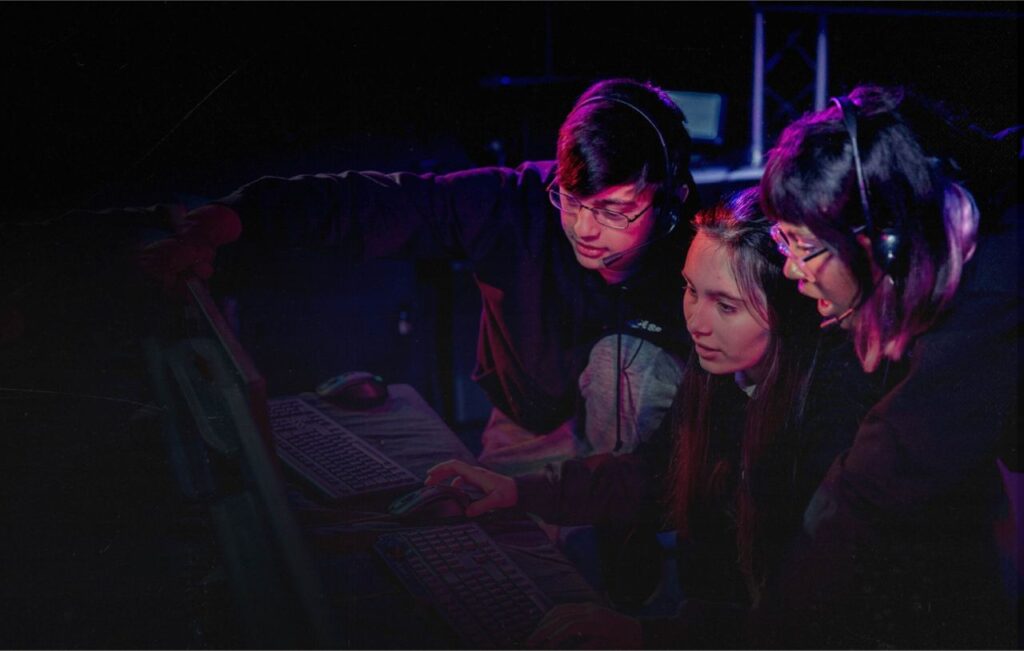
At Access Creative College, our Games Development and Games Art courses are built around the skills, tools, and mindset that studios like Dovetail are actually looking for. You’ll graduate with a portfolio that speaks for itself and a network to grow from.
It’ll only take a few minutes to apply to your dream course, and we have open days regularly so you can meet the tutors, current students, and see the facilities!