

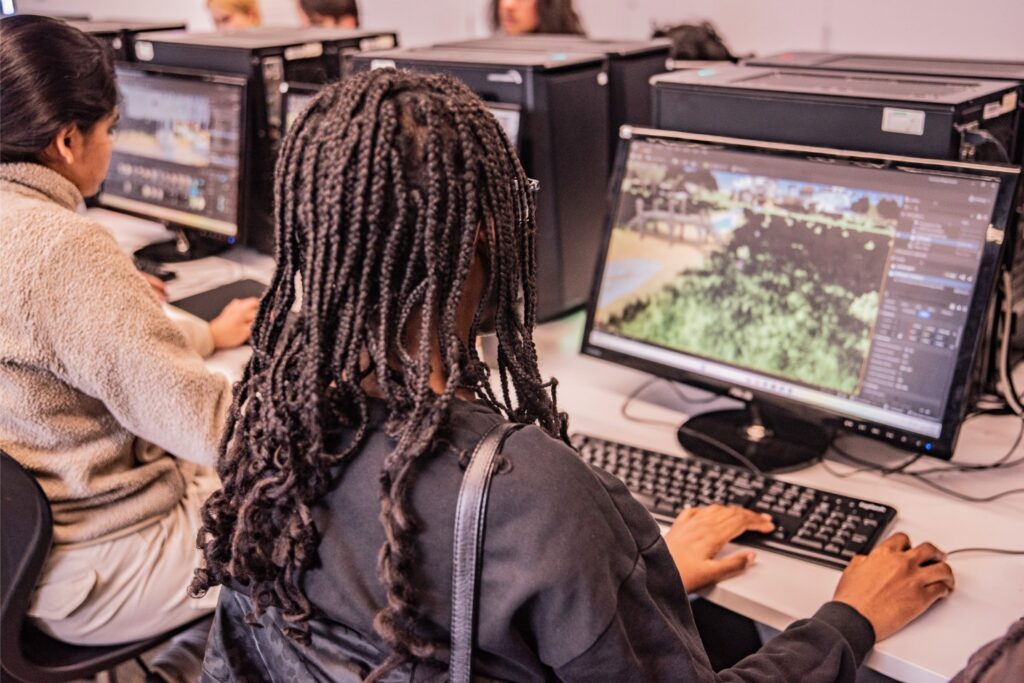
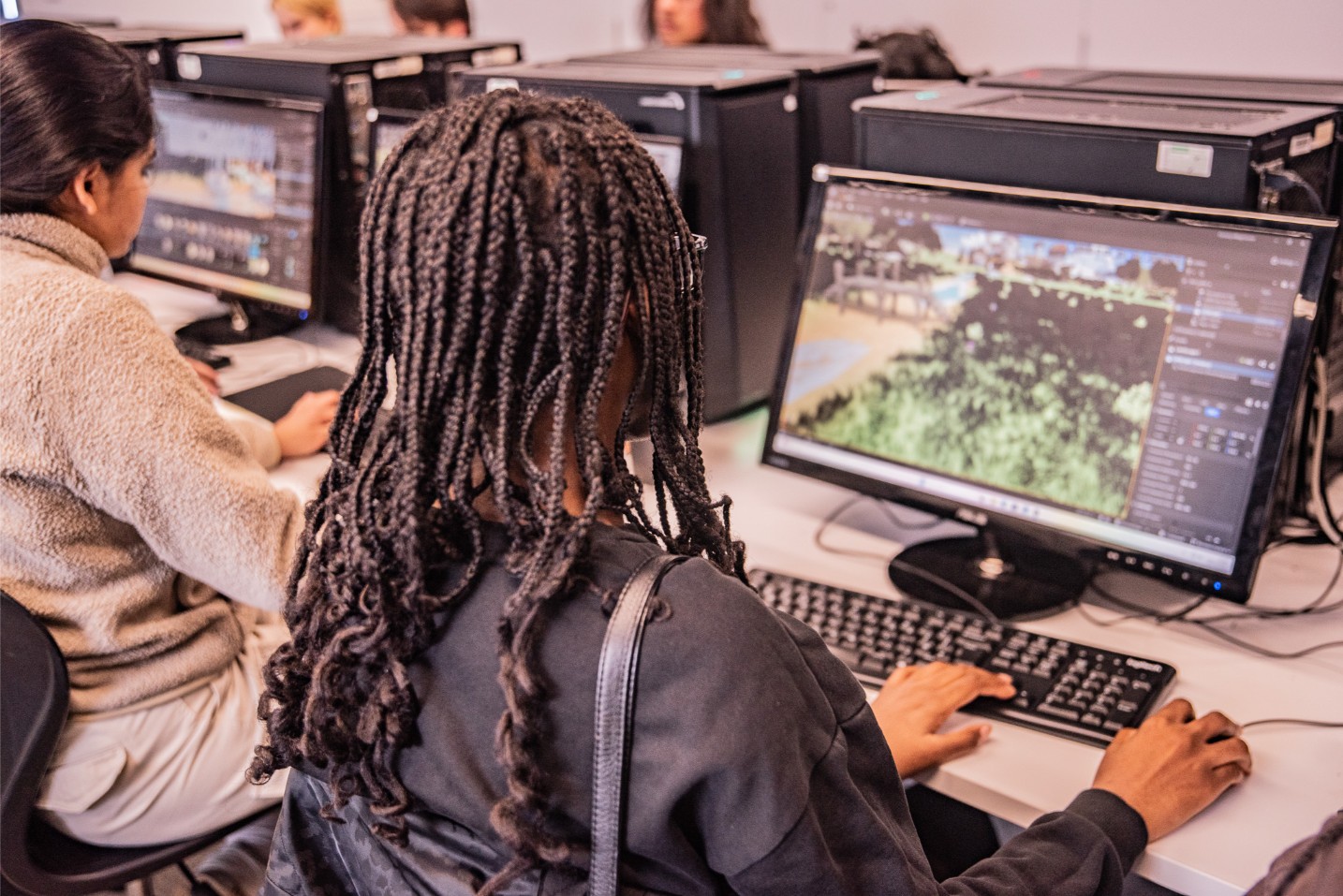
Michaela Harris spoke to our students during the industry speaker series at Access Creative College about the ins and outs of being a Games Designer.
Michaela Harris started her journey into the Games industry just like many of our students, on a Games course at college. She then went on to study Games Design at university, spent time teaching with us here at Access Creative College in Lincoln, and now works as a Games Designer at Dovetail Games, a worldwide, award-winning studio known for its immersive simulation titles such as Train Sim World, Metro Rivals, and Thomas & Friends: Wonders of Sodor.
We asked Michaela to lift the lid on what the job of a games designer actually looks like.
Who are Dovetail Games?
As Michaela puts it:
“We mainly are simulator games – we do a lot of things for enthusiasts. We have a really big market for that. People really love trains, and they are an excellent community.”
Established in 2008 by former Electronic Arts executive Paul Jackson, Dovetail Games is an award-winning games developer focusing on hobbying simulation games, best known for Train Sim World and Fishing Sim World.
So, what does a game designer actually do?
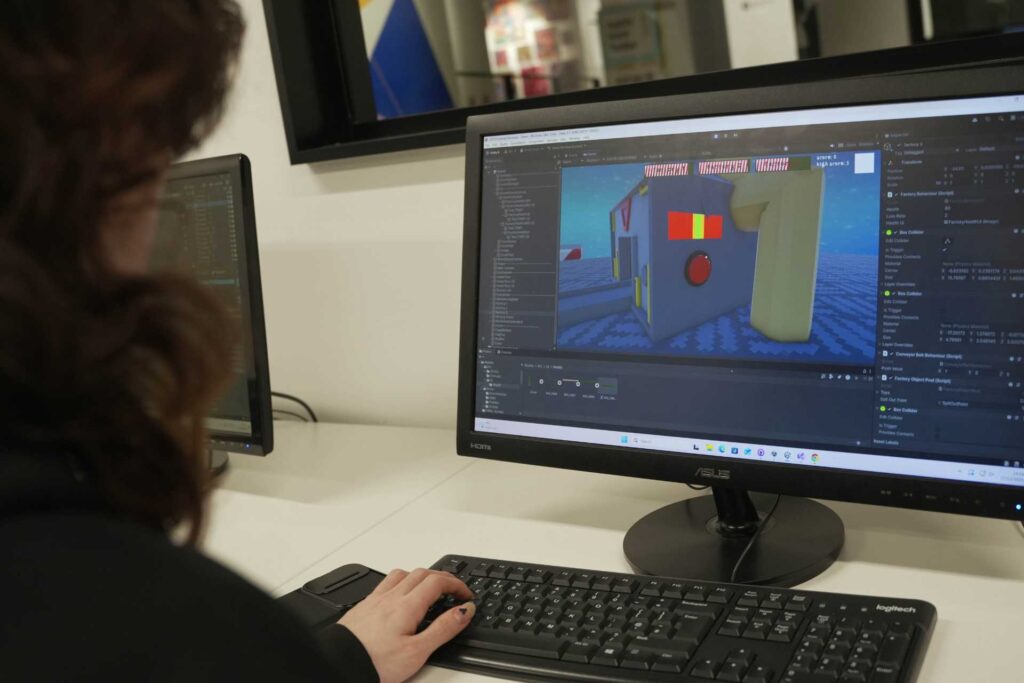
No two days are the same. Depending on where a project is in its lifecycle, Michaela’s work can shift dramatically, from deep research sessions to live engine work to community monitoring.
“Day-to-day, it can change. It can go from working in the engine… research, working with other departments. Every day is an interesting day.” – Michaela Harris.
The three stages of Games Design
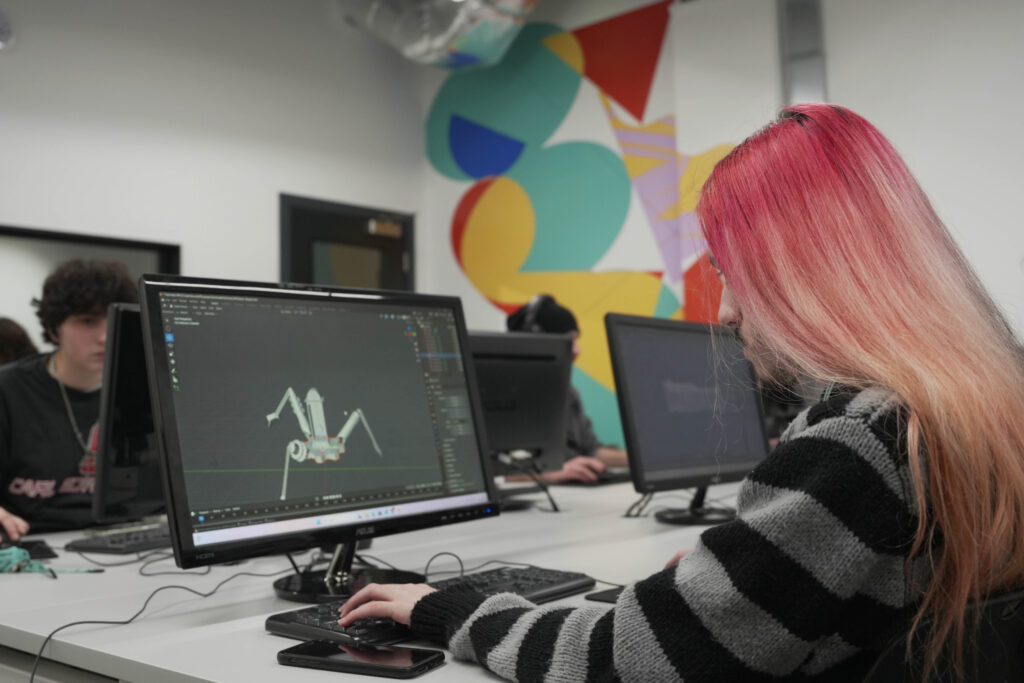
Michaela has broken down the production process into three stages that every game designer works through.
Here’s what each one actually involves:
Preproduction stage – ideas and research
This is where everything starts. Before a single line of code is written or a character is designed, Game Designers spend time researching the market, studying what’s trending, and building out the vision for the game.
“Taking time to research other games, maybe similar games that you have an idea for, is really, really great.”
One of the most important outputs of pre-production is the Game Design Document (GDD) – something Michaela describes as the bible of the whole project:
“It’s literally everything that you need to know, everything that you show your investors… it has to be super detailed.”
A GDD covers mechanics, the gameplay loop, characters, story, and much more. Michaela used Mario Kart as a clear example:
“If you’re making Mario Kart, you’d have to talk about things like the power-ups. How many power-ups are you going to have? How do the power-ups interact with the world?”
Production of the game
Once pre-production wraps, it’s time to turn those ideas into reality. This stage is all about prototyping, testing, and iterating, and it’s where designers spend the bulk of their time.
“This is where you’ll spend most of your time. Making sure your work is perfect. Making sure you iterate on the process.”
Designers work closely with multiple teams during production, art, UI, animation, and concept design, so communication and clear documentation really matter here.
One element Michaela highlighted that surprises many people? Balancing.
“You have to make sure your game is going to be good for a whole host of different people… You don’t want the game to feel boring. You don’t want the game to feel like people can’t complete it.”
Post-production
The game is out, but the work doesn’t stop. Michaela was clear on just how central the community is to this stage:
“Community is really important for any game and listening to them is one of the most fundamental things that we can do.”
Post-production involves monitoring reviews on platforms like Steam, Xbox, and PlayStation, responding to feedback, and rolling out patches to fix bugs or improve the experience.
“Our community will tell us if we’ve done anything wrong or if there’s anything they would like to see in the game.”
Michaela’s advice for aspiring students
We asked Michaela what advice she’d give her younger self before starting in the industry. Her answer was clear:
“Your portfolio is really, really important. Make sure you spend time on that.”
But beyond the practical stuff, she also wanted to flag just how connected and welcoming the games industry really is:
“I wish I knew just more about how connected it is. It is, really, honestly a brilliant community to be a part of.”
How do you get experience?
Breaking into games can feel overwhelming, especially when NDAs mean studios can’t always share what they’re working on. But there are more ways to build real, relevant experience than you might think, and Michaela had some genuinely practical advice.
One of the best starting points is beta testing and QA programmes. EA, for example, runs open playtesting opportunities where you can sign up, receive a free key for a specific game, and spend a few hours playing and submitting structured feedback. It’s real QA work, the kind studios actually do, and it’s a great thing to reference when you’re putting your CV together.
Discord communities are another underrated route, as many studios and games have official Discord servers where engaged community members can get early access to builds, contribute feedback, and sometimes get noticed by the teams behind the games. Michaela’s own studio at Dovetail actively listens to its community, so being a thoughtful, constructive voice in those spaces genuinely matters.
Then there’s Steam Early Access. Games released in early access are actively seeking player feedback, and engaging seriously with that process, writing detailed reviews, reporting bugs, flagging balance issues, and building exactly the kind of analytical thinking that game designers use every day.
Thinking about a career in Game Design?

Michaela started her journey on a games course just like ours. From there, she went to university, came back to teach, and is now designing real games played by real people all over the world. That journey is more achievable than it sounds.
At Access Creative College, our Games Development and Games Art courses are built around industry practice, the same pre-production thinking, the same design documentation, the same iterative prototyping that Michaela described. You’ll graduate with a portfolio that shows employers not just what you made, but how you think.
Applying takes less than two minutes, with interviewees ready to talk to you! Or, you can come visit us on an Open Day or trial out the course with a Taster Day at your local campus.