
Birgithe Runde is a concept artist based in the UK, a graduate of Norwich University of the Arts in Games Art and Design, and a freelancer who has worked across studios including Antidote Gamers and Hyperliminal. She joined us as part of our industry speaker series at Access Creative College to talk honestly about what it actually takes to turn your art into a career.
Her talk covered four tips for getting started as a freelance artist, and she was refreshingly straightforward about both the highs and the realities.
What is freelancing, and is it right for you?
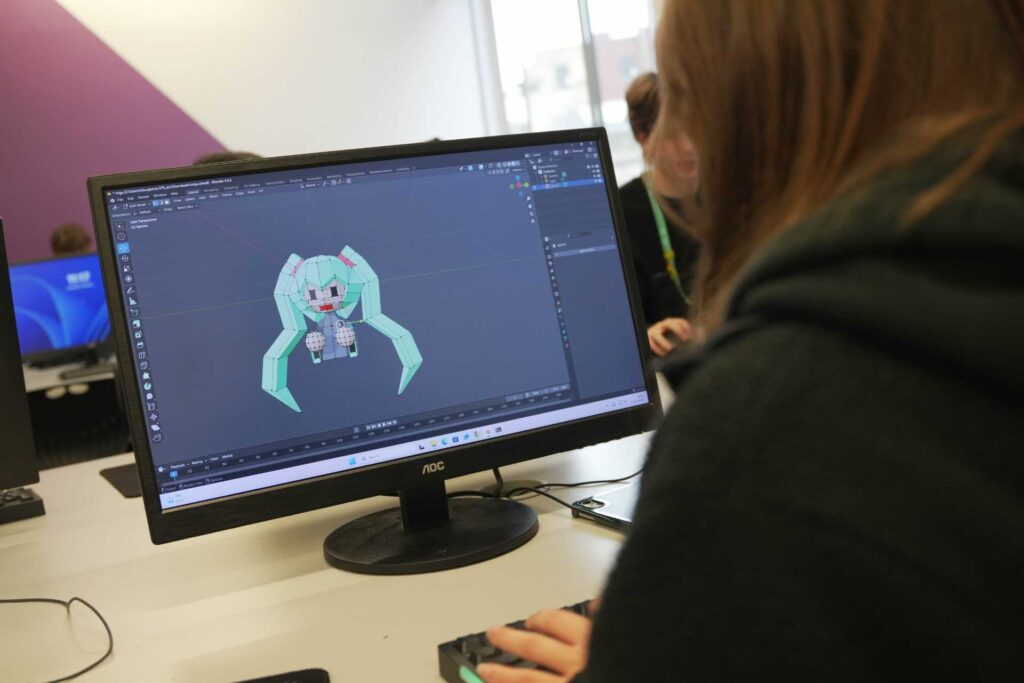
A freelancer is a self-employed worker who works across different clients and projects, choosing their clients rather than being tied to one employer. Birgithe was upfront that it comes with genuine challenges alongside the freedom.
The cons:
- There’s no guaranteed monthly wage, so some can vary significantly from month to month.
- You’ll likely need savings to cover quieter periods, and it’s common to combine freelancing with a part-time job.
- You’re also responsible for your own admin, invoicing clients, chasing payments, and managing your own taxes once you earn above a certain threshold.
The pros:
- You have real freedom over what you work on, who you work with, and how much you work.
- You set your own rates.
- Crucially, freelancing can be a genuinely smart way into the industry; rather than waiting for a full-time studio role, you can start building connections and experience through shorter project-based work.
Birgithe shared: “From the client’s perspective, it’s a lot lower stakes to hire you because they can hire you for two, three weeks to do some art… it’s not the same as hiring someone full-time.”
Birgithe also started freelancing while she was still at university, so it doesn’t have to wait until you’ve graduated.
Birgithe’s four tips for getting started
During her talk with the students, she expressed her 4 top tips for getting started as a freelance concept artist:
1) Be visible and obnoxious
The first step to getting hired is making sure people can actually find your work. Birgithe’s advice: make your art as accessible as possible.
“If you meet someone on the street, can you pull up your phone and be like, ‘here’s my art’? Can you give them one link that gives them all the cool art you do?”
She recommends having one central place where your portfolio lives, whether that’s ArtStation, Instagram, a personal website, or LinkedIn. The fewer hoops someone has to jump through to see your work, the better.
On naming: Birgithe recommends using your real name so you’re easily searchable, even if you also have a username. Keep your real name in your bio so anyone who meets you can Google you and find everything connected.
Beyond that, be present. Post your work in Discord communities. Share what you’re working on. Apply for jobs even if you’re not sure you’ll get them, because even a rejected application means a studio has now seen your work.
“Every pair of eyes that lands on your art is an opportunity for them to be interested or hire you.”
Getting involved in your local games scene is also worth doing. Meeting people in person leaves a stronger impression than any online interaction, and local game meetups are a great place to start.
2) Have range
Birgithe describes herself as a generalist, and she thinks that’s an asset, especially when working with indie studios that have a wide variety of needs at any given time.
“A game studio will have a lot of different needs at different times. If they’re done with the concept art phase, they might still need some logos, or UI design, or a poster.”
If you do want to specialise, she recommends building a strong range within your specialism. A character artist who only draws one type of character, her example was “pretty anime girls”, is limiting the number of projects they can work on.
“Do the range of characters. Every type of character. You just want to be able to have a skill for every situation you land in.”
Her advice: take on the weird jobs. Be less picky. The more you can offer, the more work you’ll get.
3) Be busy and employ yourself
Birgithe’s third tip gets at something a lot of people don’t talk about honestly: there will be quiet periods.
“Another word for freelance is also unemployed. No one has employed you.”
When there’s no client work coming in, her approach is to treat her personal projects like professional work, hiring herself to be the concept artist for her own ideas, setting goals, and dedicating specific time to it.
She also recommends carving out regular time, even just one day a week, that’s specifically for career development. Using it to update your portfolio, connect with people on LinkedIn, set goals, or explore new opportunities.
“Setting studio time apart from just drawing time shifts your brain to be more like: this is my job, and I’m a professional, and I deserve to be paid for this.”
And even the odd jobs count. Birgithe once painted a skateboard for a children’s Christmas treasure hunt. It didn’t lead to anything. She didn’t get paid. But she learned from it, and it kept her in the habit of working.
4) Grow a garden

This was Birgithe’s final tip – and probably her most memorable one.
The idea: think of your connections and opportunities like a garden. You plant many seeds at once, tend to them over time, and you don’t know which ones will bloom, or when.
One of them might be a project, and then a year later, another project. Keeping those connections intact will eventually get you a really full and nice garden that can pay your bills.”
Some connections will lead nowhere. That’s fine, it’s why you cultivate many. The ones that do come through, often unexpectedly, are what build a sustainable career over time.
What makes a strong portfolio?
When asked about portfolios, Birgithe pushed back gently on the standard advice and offered something more useful: context.
“Having a good portfolio is giving context to what you were trying to achieve with the piece.”
A strong piece of art on its own tells someone you can draw. But adding a description of what you were trying to communicate, what decisions you made, and what the brief was, shows that you can work to a brief, think creatively, and deliver on a concept. That’s what studios are actually hiring for.
How do you find clients?
Birgithe sourced her clients in a wide variety of ways – job boards, LinkedIn, in-person events, doing free work for a charity she believed in, and even going into niche corners of the internet.
One approach she mentioned: creating fan art for a niche game can open up commissions from that game’s community, or even catch the attention of the developers themselves.
On where to find the most sustainable work, her honest answer was organisations and studios rather than individual commissions.
“If you can find an organisation that needs something, they will be more helpful to you than commissions in my opinion… organisations, charities – if you can do logos, posters, art for bigger entities, they will have more money.”
Individual commissions are a great starting point, but for building a real career, working with studios and organisations tends to be more consistent and scalable.
Dealing with difficult clients

Birgithe said she’s had to chase clients for payment on a couple of occasions. Her approach: keep it professional, give them the benefit of the doubt, and follow up calmly.
If a client isn’t happy with work, her instinct is to ask for feedback and work from there – the job of a concept artist is to translate what someone wants into a visual, so if it’s not landing, that’s a conversation worth having.
And if a client is genuinely difficult?
“If people are arseholes to you, don’t work with them. That’s the whole point of being a freelancer. You have freedom. You do not have to stay anywhere you don’t want to.”
Getting started in your Games Art journey
Birgithe’s concept art journey is proof that there’s no single path into the creative industry, just a willingness to put yourself out there, take on the odd jobs, and build your portfolio and connections over time.
Whether you’re drawn to concept art, Games Art, or Games Development more broadly, we have gaming courses built around the skills and industry practice that will get you started.
Our Level 3 Games Art course is ideal if you want to develop your craft and build a portfolio that gets you noticed. Or if games development is your direction, our Level 2 and Level 3 Games Development courses can put you on the right path.
Keep an eye out for our taster days at your local Access Creative College to get a feel for the course, or book an open day to visit the campus and see the facilities for yourself!