



Ever dreamed of turning your passion for gaming into a career? The gaming industry has exploded into one of the most lucrative entertainment sectors, predicted to surpass $300 billion by 2026. From creating the next big hit game to designing stunning worlds players can explore, there’s never been a better time to break into this dynamic industry.
Understanding the gaming industry landscape

The gaming industry isn’t just about creating games anymore; it’s evolved into a massive ecosystem that includes game development, game art, esports, streaming, content creation, marketing, and more!
The UK alone is home to over 2000 game companies, and the sector continues to grow year on year.
What makes this industry particularly exciting is its diversity. Whether you’re creatively minded, technically skilled, business savvy, or all three, there’s likely a role that suits your strengths and interests.
The different career paths in gaming
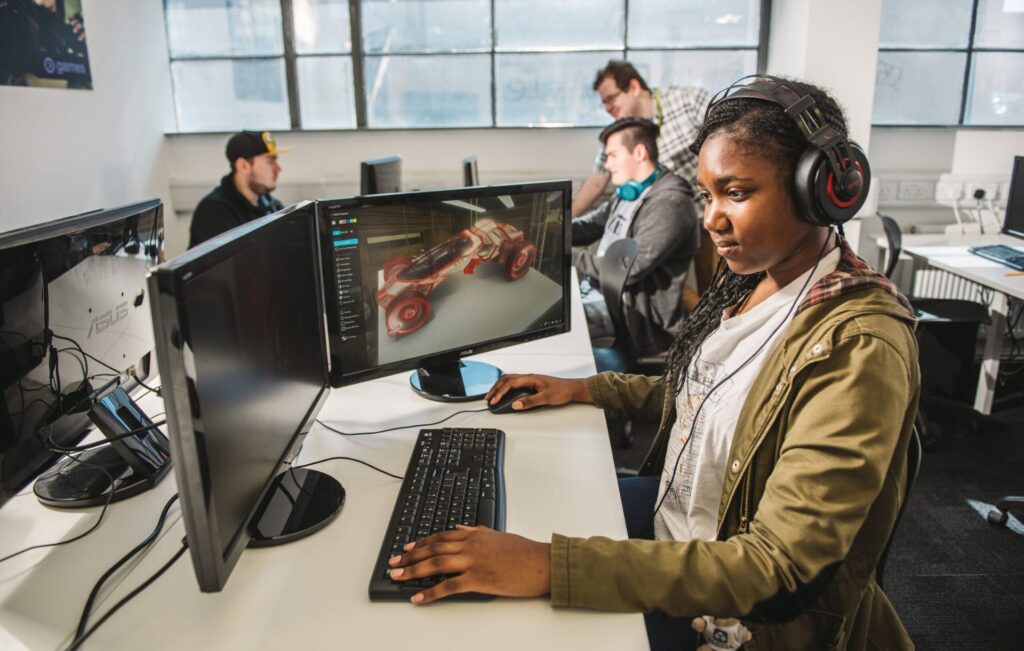
One of the most exciting things about the gaming industry is the sheer variety of roles available! You don’t need to be a programmer to work in games, and you don’t need to be an artist either. The industry needs people with all sorts of talents, from creative visionaries to technical specialists, from storytellers to business minds.
Games developers
These are technically the backbone of any game project; they write the code that makes everything work, from basic mechanics to complex AI systems. If you’re studying Games Development, you’ll learn programming languages like C#, C++, or Python, and work with engines like Unity and Unreal.
Developers collaborate closely with designers and artists to turn creative concepts into playable reality. It’s a role that requires logical thinking, problem-solving skills, and a deep understanding of how games function at a technical level.
Games artists
Game artists bring visuals to life in game worlds. This is an incredibly diverse field that includes concept artists who create the visual direction, 3D modellers who build characters and environments, texture artists who add surface detail, animators who make everything move, and UI/UX designers who create the interface players interact with. If you’re pursuing game art, you’ll learn to use industry-standard software like Blender, Maya, ZBrush, and Adobe Creative Suite. The role requires both artistic talent and technical skill, as you need to create beautiful visuals that also work within the technical constraints of game engines.
Sound designers and composers
Sound designer experts craft the audio landscape that brings games to life. From epic soundtracks to subtle environmental sounds, audio is crucial to creating immersive experiences. They work with specialist audio software and need to understand both the creative and technical aspects of game audio implementations. Many students study Level 3 Music Production and progress to a Music & Sound for Film & Games degree for this route.
Beyond development
Beyond the core 3 roles of the games industry, there are also other exciting careers within the games industry:
- QA testers are the unsung heroes who ensure games work properly before release. It’s not just playing games all day – it requires attention to detail, patience, and excellent communication skills to report bugs effectively.
- Community managers are the bridge between players and developers, managing social media, forums, and player feedback. If you’re great with people and understand gaming culture, this role could be ideal.
- Game journalists and content creators write about, review, and create content around games. This field has exploded with the rise of YouTube, Twitch, and gaming websites.
- Esports professionals include players, coaches, analysts, and event organisers. The competitive gaming scene is now a legitimate career path with its own infrastructure.
Essential skills you’ll need
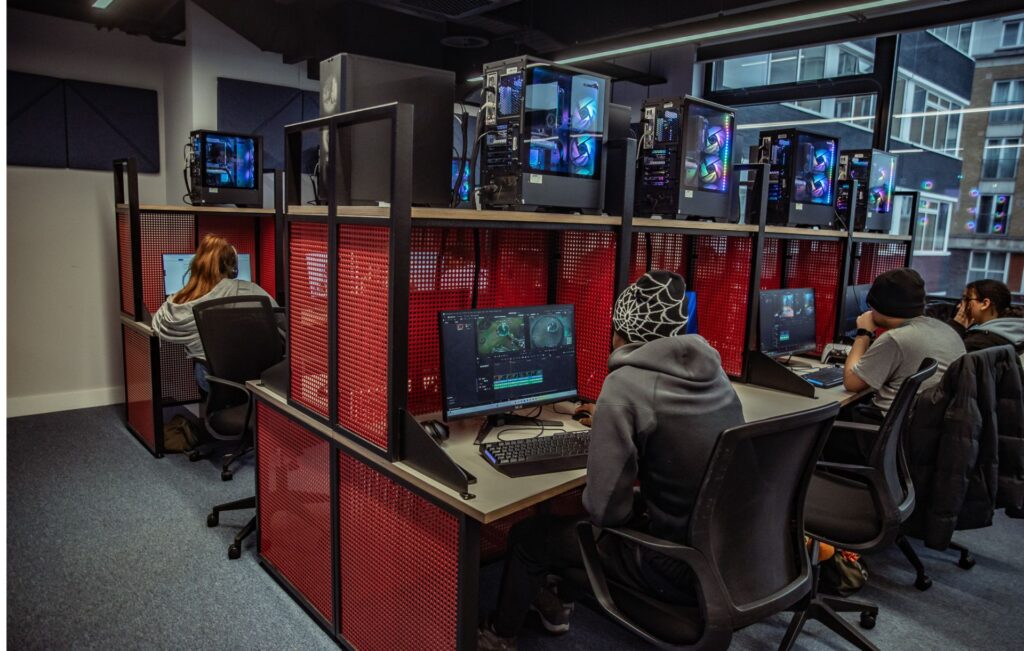
To break into the gaming industry, these are the essential skills you’ll need to succeed:
Technical skills
If you’re going into game development, you’ll need to master specific tools and software. Unity and Unreal Engine are the two biggest game engines, and proficiency in at least one is almost essential. Programming knowledge, even a basic understanding, will serve you well regardless of your specific role.
For artists, you’ll want to learn software like Blender for 3D modelling, Adobe Creative Suite for 2D work, and specialised tools like ZBrush for detailed sculpting.
Soft skills
Don’t underestimate the importance of communication and teamwork! Gaming development is highly collaborative, and you’ll need to work effectively with people from different disciplines. Problem-solving skills are crucial; you’ll encounter challenges daily that require creative solutions.
Time management is another key skill; the games industry work can be fast-paced and deadline-driven, so being able to manage your workload effectively is vital.
Portfolio development
Whatever role you’re aiming for, you’ll need a portfolio that showcases your abilities. For designers, this might include game design documents, prototypes, or mods you’ve created. Artists need a demo reel or portfolio website showing their best work. Programmers should have a GitHub repository with projects that demonstrate their coding abilities.
The key is to show completed work. Industry professionals would rather see a few polished pieces than dozens of half-finished projects, because remember: quality beats quantity every time!
Education pathways
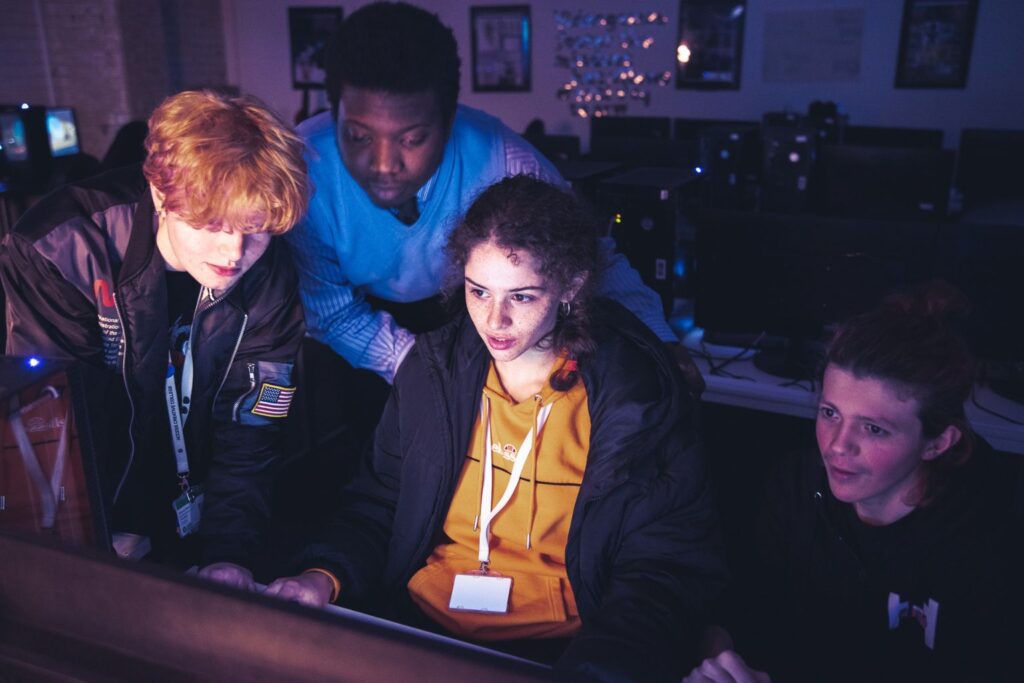
Many successful games industry professionals start with specialised qualifications. At Access Creative College, our Level 3 Games Art and Level 3 Games Development courses are designed specifically to prepare you for entry into the industry. These courses combine practical skills development with theoretical knowledge, taught by tutors with real industry experience.
These qualifications give you a solid foundation and, crucially, help you build your portfolio while learning. You’ll work with industry-standard tools and software, getting hands-on experience that employers value. You can then progress to degree-level to advance your skills.
That said, the games industry is one of the few where self-taught professionals can still thrive. There are countless free and paid resources online, from YouTube tutorials to structured courses on platforms like Udemy.
The advantage of formal education is the structured learning path, access to professional equipment and software, networking opportunities with tutors and classmates, and that all-important qualification that can open doors for further education or employment.
Breaking into the industry
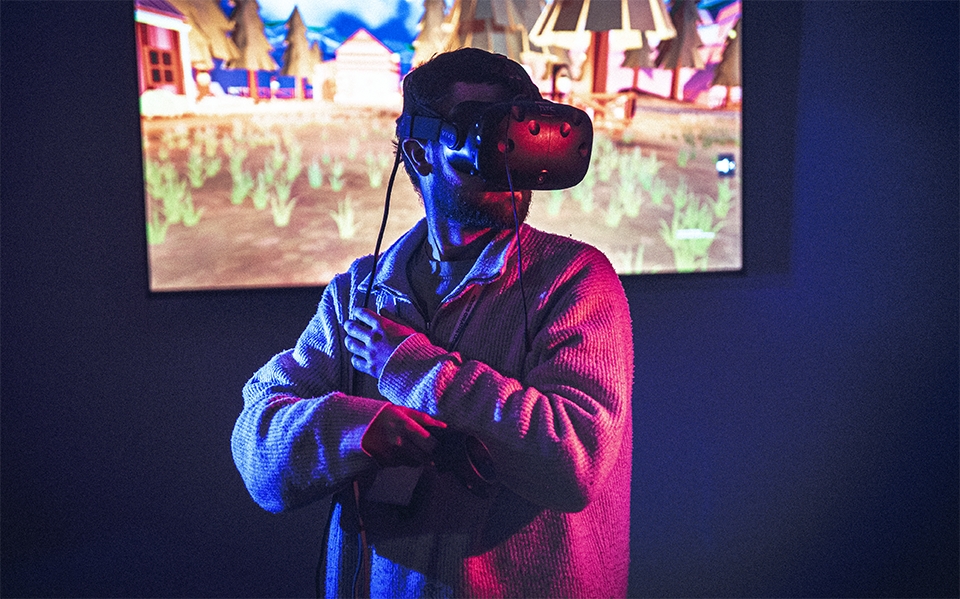
Now that you have an idea of the specific roles within the gaming industry and the essential skills you need, we are going to share our advice for breaking into the industry:
Build your network
Networking is absolutely crucial in the games industry, including attending gaming events, joining online communities, participating in game jams, and engaging with professionals on social media. Many jobs in this industry come through connections and recommendations rather than traditional job advertisements.
Game jams are particularly valuable; these events, where participants create games in a short timeframe (often 48 hours), are fantastic for meeting like-minded people, building your portfolio and proving you can work under pressure.
Land your first role
Your first job in games might not be your dream role, and that’s okay. Many professionals start in QA testing or junior positions and work their way up. The important thing is getting your foot in the door and gaining industry experience.
Apply to smaller studios and indie developers as well as big names. Smaller companies might offer more varied experience and faster progression, even if the pay is initially lower. Remember, everyone in the industry started somewhere, and many of today’s creative directors began as junior testers.
Stay updated
The games industry evolves rapidly, and staying current is essential. Keep learning new tools and techniques, follow industry trends and emerging technologies, play a wide variety of games to understand different approaches, and engage with the games community through forums, social media, and events.
Consider additional qualifications or specialised training as you progress. Many professionals pursue further education in specific areas like VR development, mobile gaming, or advanced programming techniques.
Your next steps into the gaming industry
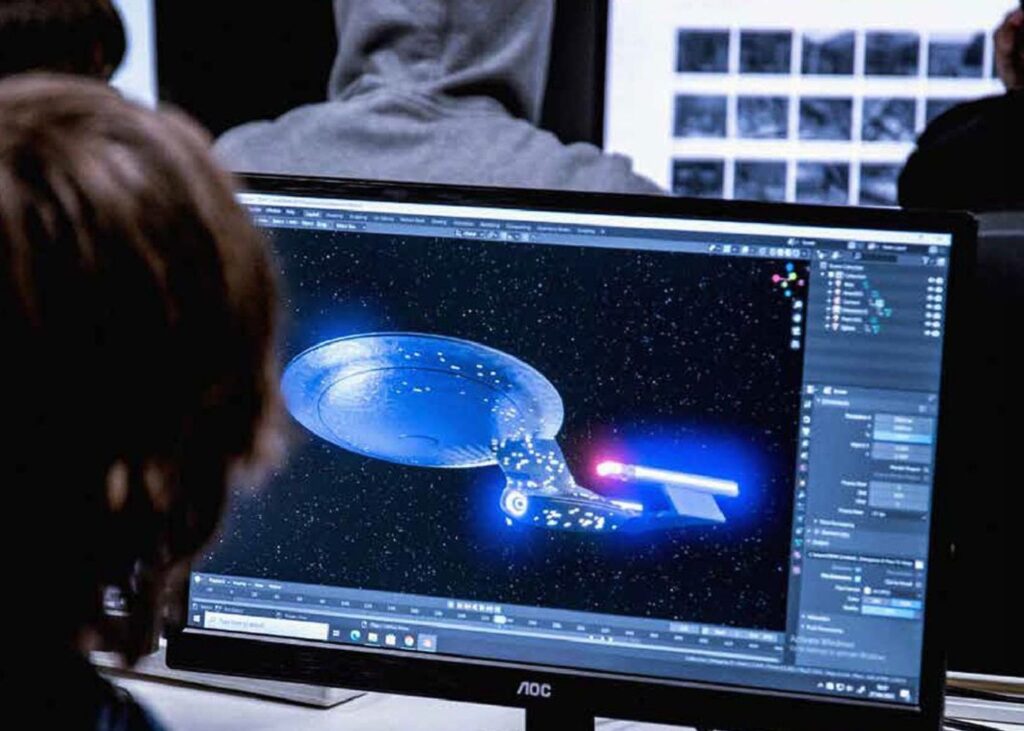
The first step is getting the right education and building your skills. At Access Creative College, our Level 3 Games Art and Level 3 Games Development courses are designed to give you exactly what you need to break into this exciting industry.
You can even hear about the experiences from a games art alumnus and a games development alumnus.
You’ll work with industry-standard tools like Unity and Unreal Engine, learn from tutors with real industry experience, build a professional portfolio to show employers, and develop both the technical and soft skills that studios look for. Our courses are practical and hands-on, preparing you for the realities of working in game development.
Applying takes less than two minutes, and our team is ready to talk you through your options and answer any questions you have about our gaming courses!