

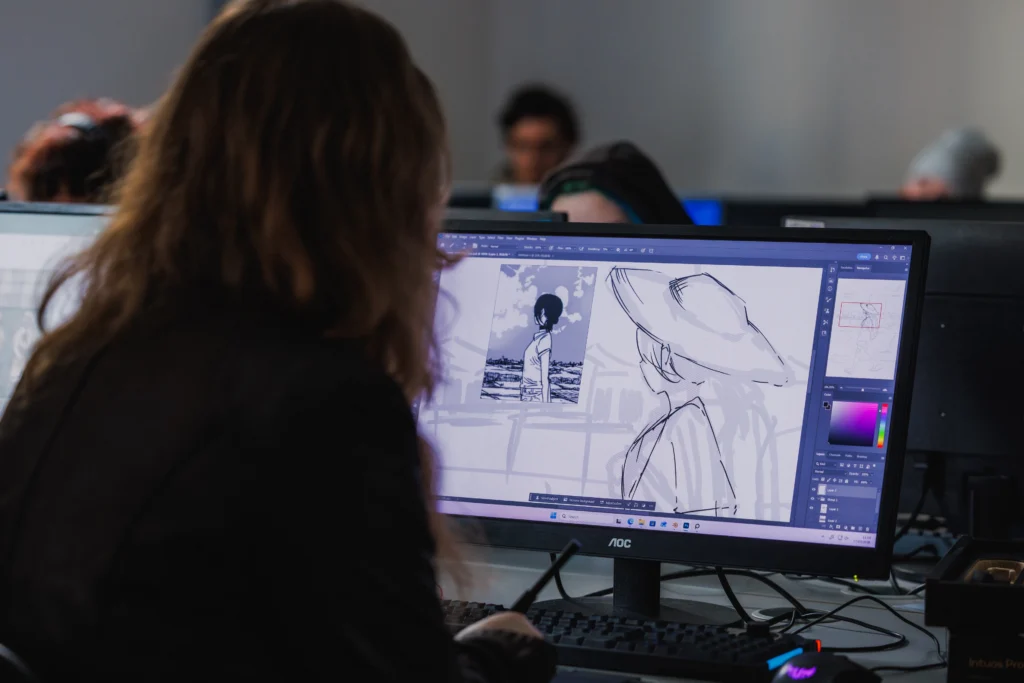
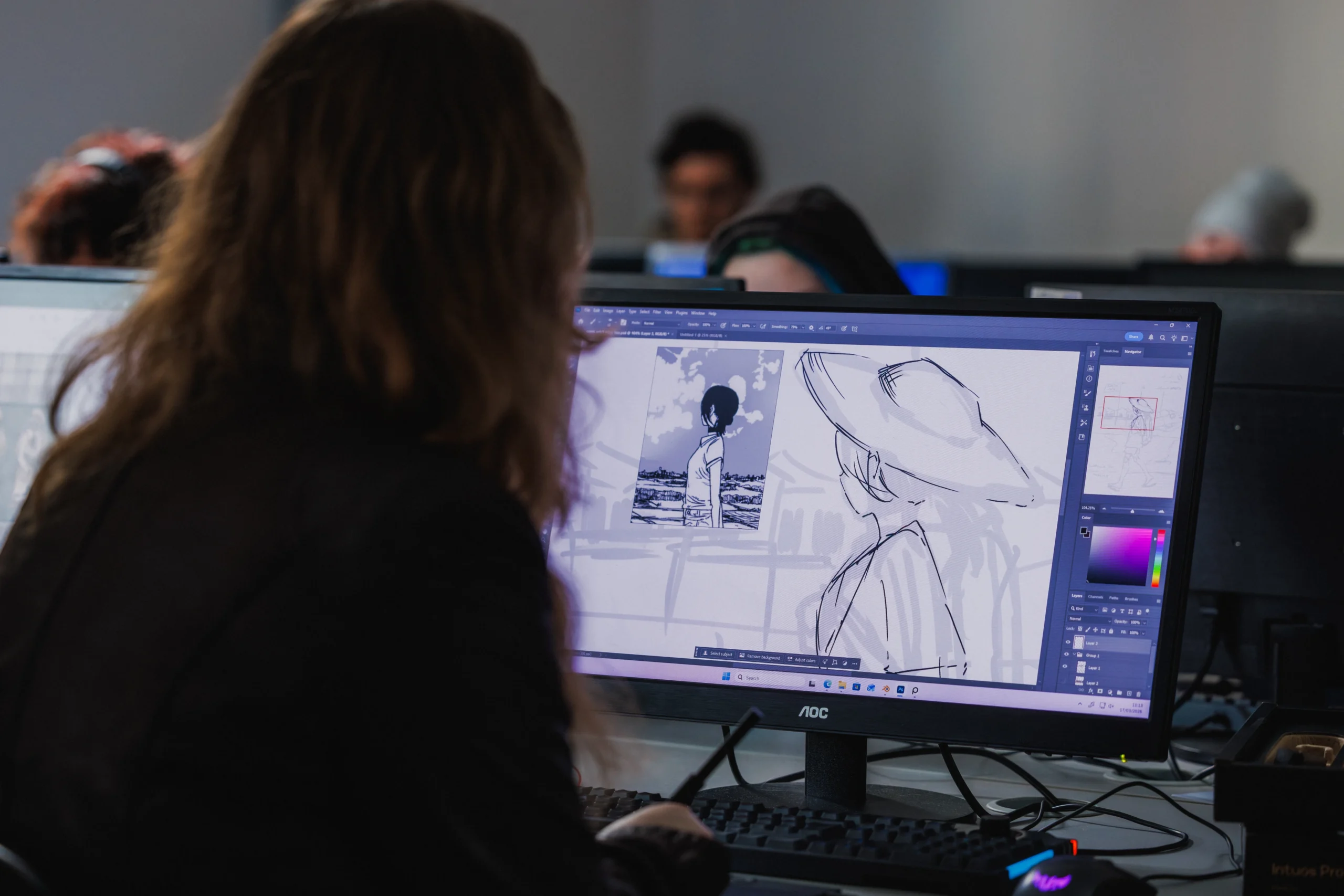
If you’re passionate about video games and thinking about turning that passion into a career, you’ve probably come across both Games Art and Games Development as potential routes, and wondered what actually separates them.
They’re closely related, they often overlap, and in a real studio environment, the two disciplines work hand in hand. But they are genuinely different skill sets, and understanding that difference is key to choosing the right games course for you.
So, what is games development?
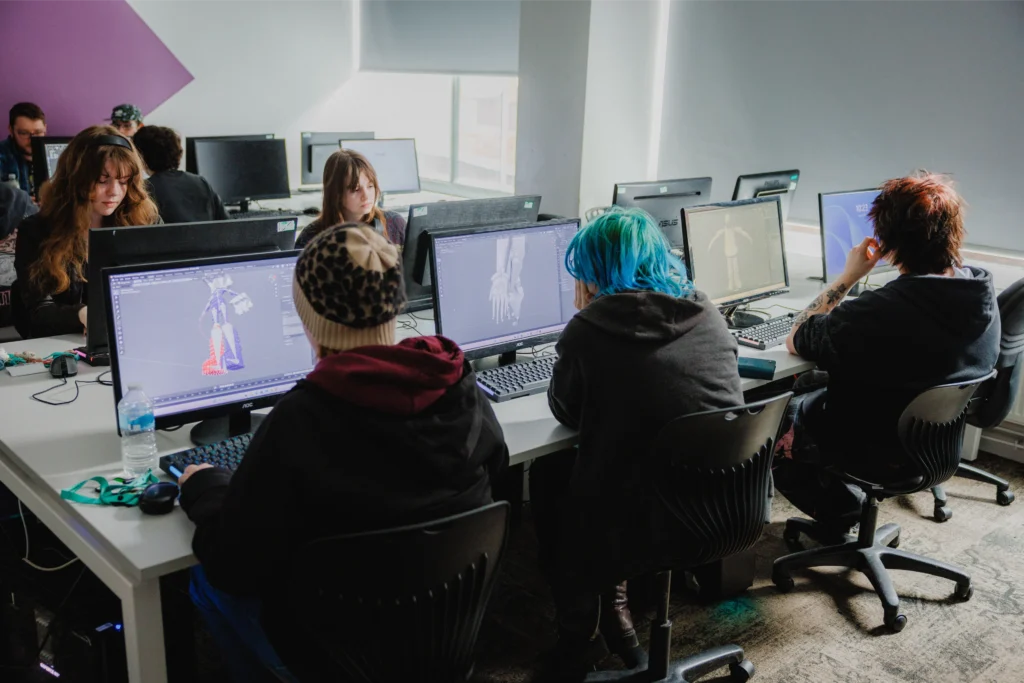
Games development is the technical backbone of any game; developers are the people who write the code that makes everything function, the physics, the mechanics, the user interface, the AI behaviour, and the logic that ties the entire experience together. Without developers, a game is just an idea on paper.
If you’re the kind of person who loves problem-solving, enjoys figuring out how things work, and gets a kick out of making something actually run, games development is likely your world. You’ll work with programming languages and game engines like Unity and Unreal Engine, learning how to build playable experiences from the ground up. Not only that, but students will also explore game design, prototyping, game mechanics, world building, asset creation and production workflows. It’s a discipline that rewards logical thinking, patience, and a genuine curiosity about the technology behind the games you love.
A Level 3 Games Development course will take you through the fundamentals of game design and programming, working on real projects that build both your technical skills and your understanding of how the industry actually operates.
What is games art?
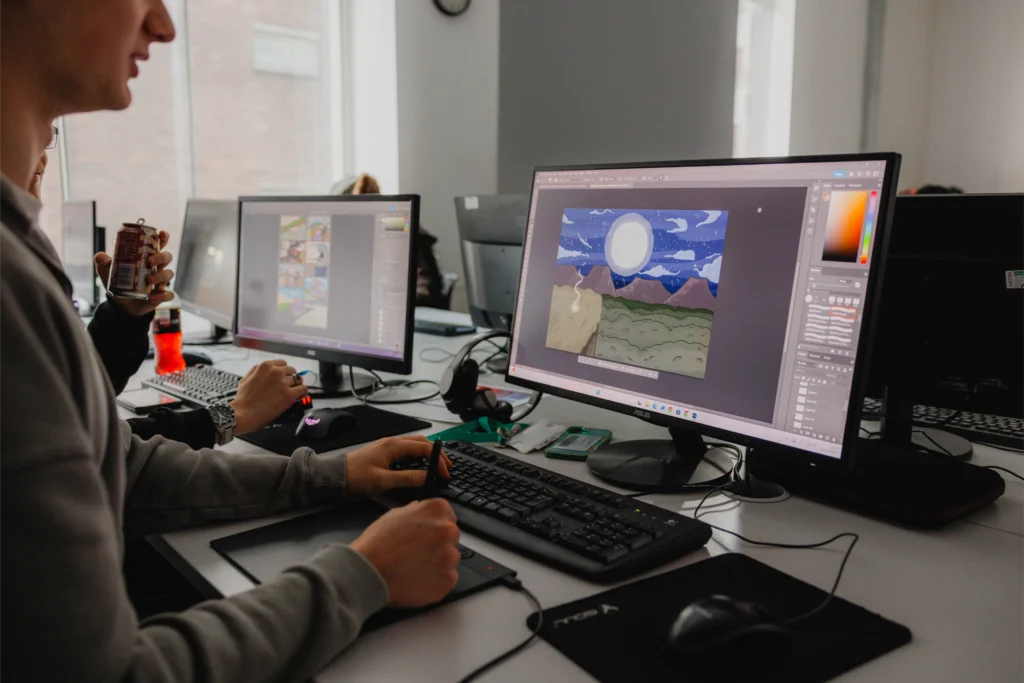
Games art is everything you see when you play a game, the characters, the environments, the weapons, the animations, the colour palette, the UI design – all of it is the work of games artists. If games development is the engine, games art is everything that makes you want to climb inside it.
Artists are responsible for building the visual world of a game, translating concepts and briefs into assets that bring the experience to life. This involves 2D illustration, 3D modelling, concept art, texturing, and visual design, all shaped by a deep understanding of what makes a game feel immersive and visually compelling.
If you’re someone who is constantly sketching characters, obsessing over the aesthetic of your favourite games, or drawn to design and illustration, games art is almost certainly the direction for you. A Level 3 Games Art course will help you develop a professional portfolio of work across a range of disciplines, giving you the skills and the evidence to take into the industry.
Where do the two overlap?

In a large studio, games artists and developers work in separate teams but collaborate constantly. An artist creates a character model; a developer rigs it so it can move. A developer builds a game world; an artist designs the textures and lighting that make it feel real. Neither discipline exists in isolation, understanding the basics of both will only make you better at whichever one you specialise in.
In smaller studios and indie environments, the lines blur even further. Many developers have a working knowledge of art tools, and many game artists understand enough about game engines to implement their own assets. The more versatile you are, the more valuable you become.
In terms of our gaming courses, Games Art and Games Development overlap in these core elements:
- 3D modelling
- Asset creation
- Games design
- Working in game engines
- Collaboration on game projects
How do you know which one is right for you?

Honestly, it usually comes down to where your instincts take you. Ask yourself: when you play a game, what captures your attention most? Is it how everything looks and feels visually? Or is it how the mechanics work and why the game behaves the way it does?
If you spend more time admiring character design, environments, and visual storytelling, then games art is your route. If you find yourself thinking about how a game was built, why certain mechanics work the way they do, or how you’d design a level from scratch – games development is calling.
Neither path is more impressive or more valuable than the other. The games industry needs both in equal measure, and the best teams in the world are built from people who are genuinely brilliant at their craft – whatever that craft happens to be.
Ready to find your path?
Whether you’re drawn to the visual side or the technical side, both routes lead to real, exciting careers in one of the fastest-growing industries on the planet.
Explore Games Art and Games Development at Access Creative College and find the one that fits you. Keep an eye out for one of our Taster Days for a more hands-on experience of what it is like to study at Access Creative College, or visit us during an Open Day to get more of a rounded insight into student life here.